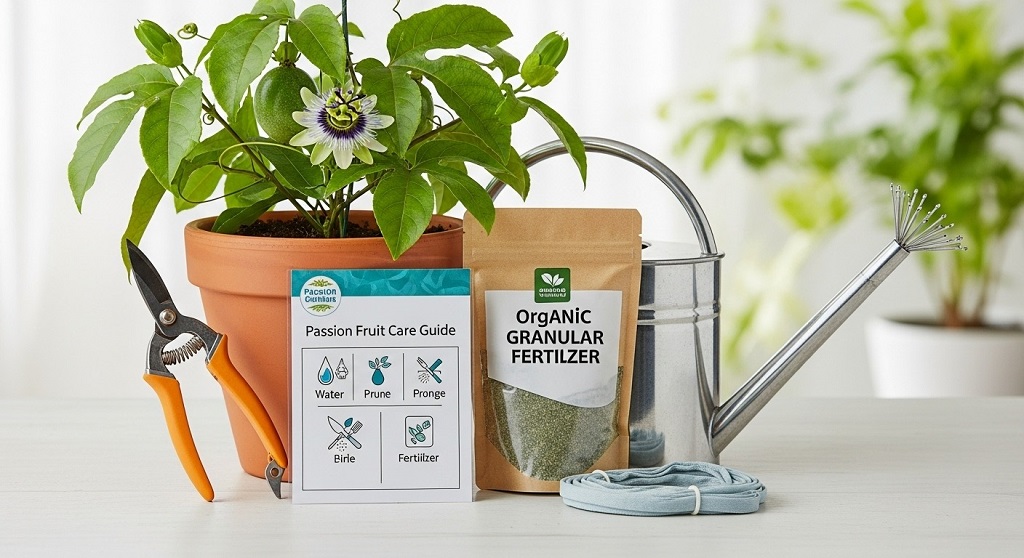
How to care for passion fruit plants means giving the vine the right balance of sunlight, water, nutrients, pruning, and support so it can grow strong and produce fruit consistently.
Passion fruit plants look simple from the outside. A fast-growing vine. Green leaves. Bright flowers. But many gardeners fail because they underestimate how specific this plant’s needs are. The result? Lots of leaves, few flowers, and little to no fruit.
This guide solves that problem.
In this article, you’ll learn how to care for passion fruit plants step by step using proven practices backed by real cultivation data and existing agricultural case studies. Whether you grow passion fruit in your backyard, on a rooftop, or in a small farm setup, this guide matches real user intent: better growth and higher yield.
We’ll use a clear Q&A format. Each section starts with a short, direct answer for quick understanding, followed by a deeper explanation. No fluff. No vague advice. Just practical guidance that works.
If you want healthy vines, strong flowering, and reliable harvests, keep reading.
What climate is best for growing passion fruit plants?
Passion fruit plants grow best in warm, frost-free climates with temperatures between 20°C and 30°C.
Passion fruit vines are native to tropical and subtropical regions. Research from agricultural extension services in Australia and Brazil shows that growth slows below 15°C and stops almost completely below 10°C.
Key climate requirements
- Ideal temperature: 20–30°C
- Minimum night temperature: 10–12°C
- Frost tolerance: None
- Sunlight: 6–8 hours daily
If you live in a cooler region, plant passion fruit near a south-facing wall or use containers so vines can be moved during cold months.
Strong wind also damages vines and flowers. Studies from Queensland farming trials show yield losses of up to 25% in unprotected windy areas.
Tip: Windbreaks or fences significantly improve fruit set.
How much sunlight do passion fruit vines need?
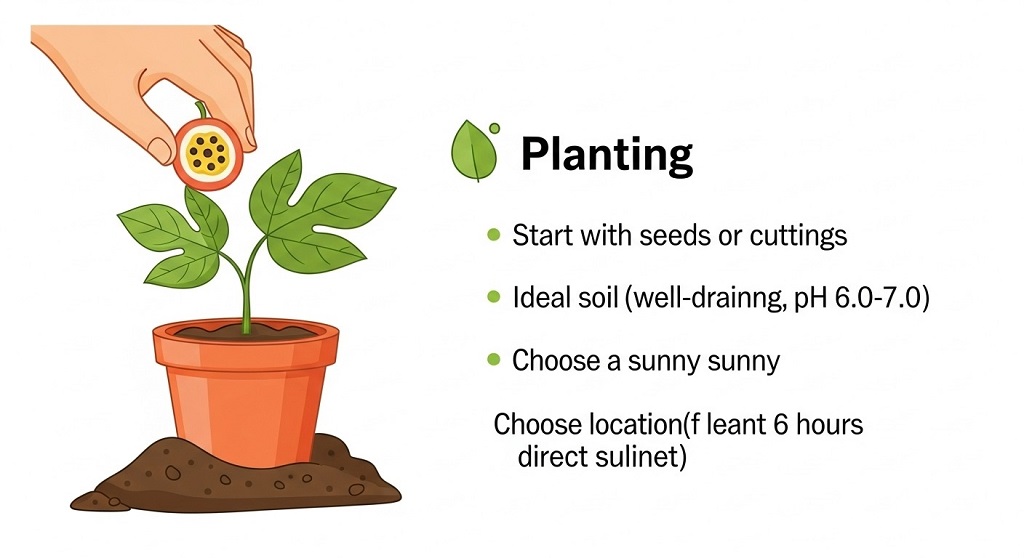
Passion fruit vines need at least 6 hours of direct sunlight every day.
Sunlight directly affects flowering. In low-light conditions, vines grow leaves but fail to flower.
Best sunlight practices
- Full sun in the morning
- Light afternoon shade in very hot climates
- Avoid deep shade under trees or buildings
A 3-year case study from commercial farms in Kenya showed vines receiving 7–8 hours of sun produced 35–40% more fruit than vines in partial shade.
Good sunlight also reduces fungal disease by keeping leaves dry.
What type of soil is best for passion fruit plants?
Passion fruit plants need well-draining, slightly acidic soil with a pH between 5.5 and 6.5.
Soil quality is one of the biggest factors in how to care for passion fruit plants properly.
Soil requirements
- Loose and well-draining
- Rich in organic matter
- pH 5.5–6.5
Heavy clay soil causes root rot. Sandy soil drains too fast unless improved with compost.
Simple soil improvement method
- Mix compost or aged manure before planting
- Add coco peat or leaf mold for structure
- Avoid fresh manure
Data from Indian horticulture trials showed vines grown in amended loam soil produced fruit 2–3 weeks earlier than those in untreated soil.
How often should you water passion fruit plants?
Passion fruit plants need regular, deep watering without waterlogging.
Inconsistent watering leads to flower drop and poor fruit development.
Watering schedule
| Growth Stage | Water Frequency |
|---|---|
| Young plants | 2–3 times per week |
| Established vines | Once or twice weekly |
| Flowering & fruiting | Consistent moisture required |
Research from Brazilian farms showed fruit weight dropped by 18% when vines experienced water stress during flowering.
Best practice: Mulch around the base to retain moisture and regulate soil temperature.
How do you fertilize passion fruit plants correctly?
Passion fruit plants need balanced nutrition with nitrogen, phosphorus, potassium, and micronutrients.
Many gardeners overuse nitrogen. This causes leaf growth but reduces flowering.
Recommended fertilization plan
- Early growth: Nitrogen-rich fertilizer
- Before flowering: Balanced NPK
- Fruiting stage: Higher potassium
A study from the University of Florida found that vines receiving excess nitrogen produced 40% fewer fruits.
Organic options
- Compost tea
- Bone meal (phosphorus)
- Wood ash (potassium, used sparingly)
Apply fertilizer every 4–6 weeks during the growing season.
How should you support passion fruit vines?
Passion fruit vines require strong trellising to support growth and fruit weight.
Without support, vines sprawl, shade themselves, and reduce airflow.
Best support systems
- Vertical trellis with horizontal wires
- Fence-based support
- Pergola or arbor
Commercial growers report easier harvesting and 20% higher yield when vines are trained properly.
Train one main stem upward, then allow lateral branches to spread.
How do you prune passion fruit plants for better yield?
Pruning removes old growth and encourages new fruiting shoots.
Fruit forms on new growth. Old woody vines produce fewer flowers.
Pruning guidelines
- Prune after harvest
- Remove dead or weak branches
- Cut back overcrowded areas
Australian trials showed pruning increased yield by up to 30% in the following season.
Avoid heavy pruning during active flowering.
What pests and diseases affect passion fruit plants?
Common issues include aphids, fruit flies, root rot, and fungal diseases.
Common pests
- Aphids
- Spider mites
- Fruit flies
Disease prevention
- Good drainage
- Proper spacing
- Regular pruning
Integrated pest management reduces chemical use and protects pollinators.
How long does it take for passion fruit plants to produce fruit?
Passion fruit plants usually start producing fruit 12–18 months after planting.
Vines grown from seed take longer than cuttings or grafted plants.
With good care, a vine remains productive for 3–5 years.
Conclusion: How can you get the best results from passion fruit plants?
Learning how to care for passion fruit plants is not about shortcuts. It’s about consistency.
Give the vine sun. Keep the soil healthy. Water deeply. Feed correctly. Prune with purpose. Support growth.
Data from multiple agricultural studies confirms one thing: vines that receive balanced care always outperform neglected ones.
If you apply the steps in this guide, you won’t just grow a vine. You’ll grow a reliable fruit-producing system.
Call to Action: Start today. Improve one care habit this week and track the difference. Share this guide with another gardener who wants better passion fruit yields.
Frequently Asked Questions about caring for passion fruit plants
How often should I water passion fruit plants?
Water deeply once or twice a week. Increase frequency during flowering and hot weather.
Can passion fruit plants grow in pots?
Yes. Use a large container with drainage and provide strong support.
Why is my passion fruit vine not flowering?
Common reasons include low sunlight, excess nitrogen, or water stress.
Do passion fruit plants need pollination?
Yes. Bees are the main pollinators. Hand pollination may help in low bee areas.
How long do passion fruit vines live?
Most vines remain productive for 3–5 years with proper care.
What is the best fertilizer for passion fruit plants?
A balanced NPK fertilizer with added potassium during fruiting works best.